Monday, 5 March 2012

Cuvee des Moines Japanese Dinner Party

Trying to arrange a dinner party with my friends is never the easiest task. Busy schedules and lack of commitment has meant that my idea of throwing a champagne tasting dinner party has taken months to come into fruition. I rabbit on to anyone silly enough to get me started about champagne’s great ability to partner a huge number of different dishes, but it’s far more fun attempting to create great pairings in practice and even more fun if they are slightly outside the established rules. Initially, I didn’t know where to start when it came to deciding what dishes to serve but by chance I stumbled across a short article in the Wall Street Journal which mentioned the synergy between Japanese cuisine and Champagne. It got me thinking about the huge array of beautiful dishes there are in Japanese cooking, from the hundreds of different sushi dishes to light, fragrant noodle dishes. These are the perfect kind of dishes to be trying out with champagne.

My aim was to come up with different courses to go with each of the main champagne styles, a brut NV, a blanc de blancs, a vintage champagne and rose champagne. So, first to choose the champagnes.... I went for Besserat de Bellefon Cuvee de Moines range. Besserat de Bellefon is owned by Lanson International and the Cuvee de Moines was conceived specifically with food in mind so it seemed a good choice. The Cuvee de Moines range was originally called ‘Crémant des Moines’ when it was launched in the 1930's, owing to its delicate mousse*. It is this delicate mousse that allows the champagne to lightly cleanse the palate without overwhelming it with too much fizz, making it a lovely food companion. 


~Menu ~

Aperitif - Besserat de Bellefon Cuvee des Moines Brut NV (£24.95 at ChampagneDirect.co.uk)

We started proceedings with the Brut NV which is a 35% chardonnay, 20% pinot noir, 45% pinot meunier blend and is aged for 3 years before disgorgement which is twice the minimum aging requirement for a non-vintage champagne. It is light on the palate but has an underlying nutty richness which complements the red apple and ripe, peachy stone fruit. The high proportion of Pinot Meunier in this blend gives it a pleasant, rounded, fruit forward character and the fact that it has not undergone any malolactic fermentation means it has a zesty finish which really wakes the palate up before the food is brought out. Overall this is a good aperitif but I fear its subtle flavours would be lost on anything but the lightest dish. 


Amuse Bouche - Wasabi Bloody Mary

Though this has nothing to do with champagne I would heartily recommend trying a wasabi Bloody Mary. I used Bloodshot Vodka which has most of the Bloody Mary spices infused in it already. The wasabi can be used as a direct replacement for Tabasco but be careful it really makes your nose tingle.  

Starter - A selection of sushi paired with Besserat de Bellefon Cuvee des Moines Blanc de Blancs NV (£29.95 at ChampagneDirect.co.uk)

The emphasis for the starter was on simple, clean flavours. We bought some beautiful Tuna and Salmon sashimi from the Japan Centre which is just off Trafalgar square and made some nigiri and maki with it. We also fried up some mixed tempura vegetables and had the obligatory edamame as well. With this course we paired the Besserat de Bellefon Cuvee des Moines Blanc de Blancs NV, a 100% chardonnay which, like the Brut NV, is aged for three years before disgorgement without undergoing malolactic fermentation. Now, I confess that I am not really into the business of analysing what a champagne looks like in the glass, I gain far more pleasure from the aroma and taste, but it is very pretty. It almost radiates golden light from the glass so you can’t help but notice. The aromas are the next thing to grab you, there are floral notes of honeysuckle which compliment the bracing lemony style of the wine. A couple of my guests commented that this champagne was ‘a bit sharp’ for them and I couldn't argue with them. I, however, very much see this as a positive aspect, especially when you are pairing it with fish. It had a focused acidity which cut through the fattiness of the salmon and tuna nigiri. Almost unanimously we thought it tasted better with the food and the food most certainly tasted better when washed down with the champagne so this was definitely a pairing which made the total add up to more than the sum of its parts. Success!

 
Main - Chicken Katsu Curry with a Mooli Salad paired with Besserat de Bellefon Cuvee des Moines Vintage 2002 (£32.95 at ChampagneDirect.co.uk)

Now to my most eagerly anticipated dish, the main course. I found a lovely recipe for a katsu curry in Gizzi Erskine’s book ‘Gizzi’s Kitchen Magic’. A curry and champagne pairing was a bit more daring than my first course but I really wanted to highlight to my guests how versatile champagne can be. Being my heaviest dish I needed a champagne with a bit of character and body so a vintage or blanc de noir where my preferred options. I went for the vintage option, the Besserat de Bellefon Cuvee des Moines Vintage 2002 to be precise. On paper I think this champagne really delivers beyond its price point. It's aged for 5 years on it lees before release which is a full two years more than required for a vintage champagne. This long aging gave it some aromatic, spicy notes of cinnamon and star anise which picked up on the spice mixture in the garam masala in the curry. It’s worth mentioning that I made the curry very mild so the heat would not clash with the high acidity of the champagne. Despite my initial apprehensions this pairing was very pleasant indeed. Though not an obvious match, the champagne was not at all overwhelmed by the bold flavours of the curry. It cut through the creaminess of the dish and left our palates refreshed and ready for our next bite. This just goes to show that even if you think outside the box with your food pairing you can create some great flavour combinations that go way beyond the established norms.


Dessert - Green tea cheese cake with Besserat de Bellefon Cuvee des Moines Rosé NV (£38 at Oddbins)

Pairing desserts with champagne is very tricky so this was the course I was most wary about. Classically a demi-sec would be the best option but, to be honest, I didn't have a demi sec so why not try something different? We finished with the Cuvee des Moines Rosé NV to go with the cheesecake. Unfortunately, this didn't work at all (perhaps not surprisingly). The cheese cake was very nice but the sweetness just brought out a bitterness in the champagne which was not particularly palatable. When we tasted the rose by itself it also happened to be the least impressive of all the champagnes. It lacked the focus of the blanc de blancs and the simple charm of the brut NV. Perhaps by this stage in the evening our palates were a touch fatigued and our bellies were a bit full.
Overall a fantastic time was had by all. Everyone came away from the evening having been seduced by the champagnes and surprised by it's incredible versatility. I came away with a lot of washing up and a slightly sore head the next morning but a sense of a good job well done.

*The crémant style was originally a low pressure style (typically 4 atmospheres instead of 6 atmospheres) of champagne with a light mousse but this term was banned for use in champagne in 1994 in a bid to save confusion with the sparkling wines from other areas for France such as ‘Crémant de Loire’ and ‘Crémant de Bourgogne’.

Friday, 10 February 2012

Rosés are Red, Violets are blue

With Valentine’s day around the corner it only seems natural to write something about rosé champagne, probably the champagne which we take least seriously in the UK. Usually bought for its pretty colour and often rather tacky association with all things romantic, and not for its merits as a great partner to food and a truly vinous champagne style.

Most rosé champagne is made in a very different way to other rosé wines. It's one of very few appellations to allow blending red wine with white wine. Typically they add around 7-11% red wine in to the blend until the right body, texture and aromatics are integrated into the wine. This type of blending allows the champagne houses to maintain a consistent colour and the consistent ‘house style’ which is oh-so important in champagne.

One of the things I love about rosé champagne, above other champagne styles, is the huge variety of styles that they offer, from the bold structured style of Bollinger's Grande Anne Rosé to the floral elegant style of Laurent Perrier Rosé and everything else in-between.

Here are some of my favourites:

Something to go with your Lobster
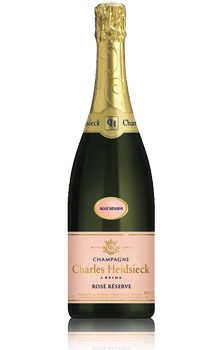
Charles Heidseick Rose Reserve NV

This is a great wine to go with you posh Valentine’s dinner. It has beautiful red berry aromatics of strawberry and raspberry and a creamy, silk-like texture on the palate packed with jammy fruits. The red wine in the blend (7%) comes from the great grand cru sites of Ambonnay and Bouzy, giving the blend enough power and intensity stand up to a rich lobster dishes or even lighter game dishes such as Guinea fowl.
Keep it English
Balfour Brut Rosé - £35.99 at Waitrose

This is arguably England’s finest sparkling rosé (though Nyetimber’s Brut Rose and the Gusbourne Estate Rose are fantastic too). It has beautiful stone fruit aromas with peach, nectarine and even a hint of marzipan on the palate. It’s a great aperitif and is very easy to get through a whole bottle with your partner.
On Special
Lanson Rosé NV - £17.99 at Tesco (usually £35.99)

This is £17.99 at Tesco until the 14th February and that makes it incredibly good value for money. If you are looking for the safety of a brand you know at great price then this is the champagne for you. Like the Lanson Brut NV, this champagne doesn’t go through malolactic fermentation and as a result has a racy acidity which is great with smoked salmon blinis and other oily fish dishes. It also has a pure raspberry flavours which would work with sour fruit based desserts like summer fruits and cream. 
Splash Out
Bollinger Grande Anne Rosé 2002 - £85 at Majestic

Quite simply, to my taste, this is the best rosé champagne out there and the 2002 is one of my top 5 champagnes of all time. It’s made exclusively from Grand (77%) and Premier cru (23%) juice and has around 7-8% red wine from La Cote Aux Enfants added to the blend. It has a pretty salmon pink colour and a forest floor charactor on the nose. It’s another full bodied champagne which works great with so many types of food. It is rich enough to stand up to venison with a blackberry jus or an earthy veal and mushroom dish. It also has a lifted fruit-driven finish, which cleanses your palate like no other wine on earth. Go on, treat yourself.

Tuesday, 10 January 2012

The Special Club

No, its not a Marvel superhero collective but they're not far off from becoming the equivalent in Champagne. Created in 1971, the Special Club or 'Tresors de Champagne' is a group of like-minded grower champagnes who all share a common goal, to produce the best expression of their individual terroir that they can. Membership of this club is pretty exclusive. There are currently 25 members who must be Recoltant-Manipulants and must sign up to the strict 'charter' which outlines the clubs ideals and philosophy.
In exceptional years each member is given the opportunity to create a Special Club Cuvee. This is a blend which the grower thinks is the best possible expression of their house style combined with the character of the vintage. But before the clubman can even make a champagne a blend the 'vin clairs' ,which are the still wines produced before the secondary bottle fermentation, must pass a taste test with all the other members. If they are not happy with the quality of the blend then it cannot be presented in the specially created bottle with the special club label. The final champagne will also be tasted before release to make sure it is up to the Special Club standard.

Seeing a champagne presented in this unique bottle is as good a guarantee of quality that you are likely to find in a grower champagne. It's usually the growers 'tete de cuvee' or top champagne. 

Current club members are:

Paul Bara (Bouzy)
Roland Champion (Chouilly)
Charlier et Fils (Montigny-sous-Châtillon)
Forget-Chemin (Ludes)
Fresnet-Juillet (Verzy)
Grongnet (Etoges)
Marc Hébrart (Mareuil-sur-Aÿ)
Vincent Joudart (Fèrebrianges)
Lamiable (Tours-sur-Marne)
Larmandier Père et Fils (Cramant)
J. Lassalle (Chigny-lès-Roses)
Launois Père et Fils (Le Mesnil-sur-Oger)
Joseh Loriot-Pagel (Festigny)
A. Margaine (Villers-Marmery)
Moussé Fils (Cuisles)
Nominé-Renard (Villevenard)
Salmon (Chaumuzy)
Remy Massin et Fils (Ville sur Arce)
Vazart-Coquart (Chouilly)

Past members include Lamandier-Bernier (Reni Rezepi's favourite grower) and Pierre Peters.

Now, these are not easy champagnes to get hold of. They are made in very small quantities but they are well worth hunting down if you can. UK Stockists include The Sampler, Champagne Warehouse, Armit, Berry Bros and Nickolls and Perks.

Tuesday, 11 October 2011

Clos of Champagne

Definition: Clos, from the French for closure or enclosed, is a walled vineyard used to protect the grapes from theft as well as improving the mesoclimate. They are often founded by Cistercian monks and the word is often used in the name of famous wines even when the wall no longer exists.

I have been trawling through books and the internet trying to find the exact number of clos in the Champagne region, but haven't had much luck getting an answer. I could find around 16 but I'm sure there must be more. However many there are, they certainly only account for a tiny fraction of the 80,000 hectares of vines there are in the region. I'm only going to go through a few of the famous ones otherwise this could turn into an essay.

There is much debate as to how much difference having a wall around your vineyard actually makes, but it's hard to argue against the fact that walls protect against a number of evils. There are two vineyards in the whole region which have managed to survive the root-chomping phylloxera louse epidemic in the early 20th century. One is Clos St-Jacques and the other is Clos des Chaudes, both of which are under Bollinger's ownership. There is no doubt that they have managed to survive partly due to their high surrounding walls. It is the vines from these vineyards which make the fabled Vielle Vignes Francaises super-prestige cuvee which commands prices starting at £300 a bottle.


These walls also protect the vines from the cold winds which are also common in Champagne. Krug's 1.85 hectare site, Clos du Mesnil in Mesnil-sur-Oger, also benefits from actually being wrapped in the warm blanket of the town itself. The clos' ideal South-East facing aspect and chalky soils help to make an extremely fine champagne of great purity and elegance. Krug released its 1995 Clos d'Ambonnay in 2008 and as if Clos des Mesnil wasn't pricey or exclusive enough, Clos d'Ambonnay is only 0.685 hectares with only c.3000 bottles of the 1995 produced at the astronomical release price of £1,450 a pop.

For me, one of Champagne's most interesting clos' is not actually a clos at all. Phillipponnat's premier cru site, Clos des Goisses in Mareuil-sur-Ay, only has a wall on the bottom edge of the vineyard. But lets not be picky; Clos des Goisses is an incredible vineyard and well worth a trip to see if you are ever in the region. It is on a steep, south-facing slope and has an average temperature around 1.5 degrees warmer than the average temperature in champagne. This means this clos can make wines of superior ripeness, even in miserable years like 2001. Tom Stevenson wrote a great article on this amazing vineyard.


Another lesser known, but equally beguiling clos from Mareuil-sur-Ay, is Billecart-Salmon's Le Clos St-Hilaire. At around one hectare this vineyard can only make between 3,500 and 7,500 bottles of champagne every year and is only made in exceptional vintages. Clos St-Hilaire is situated right next to Billecart-Salmons grande maison and is named after the patron saint of the village it lies in. Only Pinot Noir is planted here and the Blanc de Noirs produced are bold and powerful with great ageing potential, not unlike Bollinger's Vielle Vignes Francaises.


The final clos I want to talk about is the only clos actually within the city of Reims. It is owned by Lanson and is very originally named Clos Lanson. It is a single hectare site which was bought by Lanson in 1976. The Chardonnay grown in this vineyard has been used as a component in both Lanson's Black Label and Gold Label champagnes for years, but next year (2012) will see its birth as a single vineyard cuvee. I have no doubt that there will be a big marketing campaign letting everyone know how exclusive and rare this champagne is and I'm sure it will have a price to match its rarity. I am particularly looking forward to hearing more about it.

I hope you find these incredible vineyards as interesting as I do and hope you get a chance to try a couple of them. You may have to re-mortgage your house first though.  

A List of the Clos' of Champagne (which I could find), but do let me know if I have missed any:

- Clos du Mesnil (Mesnil sur Oger) Champagne Krug - Reims
- Clos d'Ambonnay (Ambonnay) Champagne Krug - Reims
- Clos du Moulin (Chigny les Roses) Cattier - Chigny les Roses
- Clos des Chaulins (Pargny les Reims) Champagne Médot - Reims
- Clos Cazals (Oger) Champagne Claude Cazals - Le Mesnil sur Oger
- Clos des Goisses (Mareuil sur Ay) Champagne Philipponnat - Mareuil sur Ay
- Clos des Champions (Cumières) Champagne Leclerc Briant - Epernay
- Clos des Plants de Chênes (Moussy) Champagne José Michel- Moussy
- Clos Saint Jacques and Clos Chaudes (Ay) Champagne Bollinger - Ay
- Clos Saint-Hilaire (Mareuil sur Ay) Champagne Billecart Salmon - Mareuil sur Ay
- Clos Virgile (Beaumont-sur-Vesle) Champagne Portier - Beaumont-sur-Vesle
- Petit Clos (Bouzy) Champagne Jean Vesselle - Bouzy
- Clos l'Abbé (Cramant) Champagne Hubert Soreau - Cramant
- Clos Notre Dame (Vertus) Veuve Fourney - Vertus
- Clos des Bergeronneau (Villledommange) Champagne Florent Bergeronneau-Marion - Villledommange
- Clos Lanson (Reims) Champagne Lanson - Reims - 2012 release

Sunday, 28 August 2011

Growing in Popularity - Grower Champagnes

There are more than 15,000 growers in Champagne owning around 90% of the vineyards, yet if you were to ask most people to name as many champagnes as they could they would struggle to name more than ten. This is because the vast majority of these growers sell there grapes on to Negociants. These tend to be large champagne houses for which a consistant house style year in, year out is very important. This is acheived by blending wines from, often, over fifty different vineyards. For those who seek champagnes which can display a more acute sense of terroir and the sense of place you find in other many french regions, then Grower champagnes are definitely worth investing some time into.


The is a myriad of lesser-known champagnes in the market, so the first thing you need to be able to decipher is which are grower champagnes and which are Negociant champagnes. You can do this by looking carefully at the front label (usually the bottom right hand side). There should be a batch number starting with two letters and followed by some numbers. The letters will tell you the type of producer the champagne has come from. If it has come from a merchant like Veuve Clicquot or Lanson it will start with NM (Négociant manipulant) and if it has come from a Grower it will start with RM (Récoltant manipulant).

So how do you know what to choose? There are so many grower champagnes in the market there are obviously going to be many good ones and many bad ones. Here are my tips for helping you choose:

1) The best grower champagnes tend to come from the best vineyard sites. Picking a bottle with 'Grand Cru' on the label is a good indication of quality (its not a guarantee though)

2) Due to grower champagnes coming from small estates they have less ability to blend from multiple different sites (or Lieux dits) and vintages to ensure a consistent style. I say, ignore consistency and embrace vintage variation, after all, we do it with every other wine we buy. Buying vintage grower champagnes should be another indication of quality. If you are buying a champagne from an excellent site and from an excellent vintage you should be on to a winner, as long as the grower has a proficient winemaker.

3) Buy from a wine merchant which you trust. My favourites to buy from are:
  • The Sampler (South Kensington, Islington) - winner of best independent champagne retailer 2011 by the Champagne Summit. A thorough list headed by cru.
  • Berry Bros and Rudd (St James Street) - The worlds most famous wine merchant with a top champagne list.
  • Champagne Growers Direct (online) - lots of big name grower champagnes, plenty of tasting notes from well known critics and free delivery for purchases of three bottles or more. It also has profiles on all the growers that it uses.

Here are some of my favourite grower champagnes:
  • Eric Rodez - Eric Rodez is based in Ambonnay and spent a year working at Krug. He's famous for his full bodied, meaty Blanc de Noirs champagnes which are vinified in oak.
  • Egly Ouriet - another Ambonnay grower whose average vine age is 35 years producing intense, powerful Pinot Noir based champagnes which are aged for a minimum of 3 years before release.
  • Bonnaire - from Cramant this grower concentrates on Chardonnay based champagnes which are full of elegant fruit, floral notes and a flinty stone character. An excellent example of the Cramant regional style.
  • Guy Charlemagne - This Le Mesnil-sur-Oger producer makes champagnes which epitimise the Le Mesnil style. They are so pure and racy with heaps of delicate fruit and a chalky minerality. The average vine age in their vineyards are 31 years which helps explain why they produce such focused champagnes.
  • Jacques Selosse - Jacques Selosse is a legend in champagne who produces truly unique, vinous champagnes like no other. Selosse is based in Avise with vineyards in Cramant and Oger as well. His champagnes all vary in style massively and do not come cheap but are worth splashing out on for a treat.
I have attached a good video from Wine Library TV with a few grower champagnes recommended for your viewing pleasure:

Sunday, 7 August 2011

To Decant or not to Decant?

For most people, even many champagne aficionados, the thought of decanting a champagne before they serve it would not even even cross their mind. Surely it will cause your prized champagne to lose all of its bubbles, wouldn't it? However, it is an interesting practice which seems to be gathering momentum recently, especially with the sommeliers in Paris. It's not as mad as you may think though, after all, it is a fine wine and you wouldn't dream of opening your favourite Bordeaux or Burgundy without allowing it to 'breathe' for an hour or two. Furthermore, the act of decanting doesn't actually cause a champagne to lose its bubbles as fast as you may think. Experts have worked out that a champagne will only lose 10-15% of its effervescence through the act of decanting. A word of warning though, you must take care when decanting your champagne, imagine you are trying to pour the perfect pint!

So, what can you actually gain from decanting a champagne? Like, with other wines, decanting champagne allows aromas in the wine to be released. This causes the champagne to become more fragrant and it can also dramatically change how your champagne tastes. Something which seems fresh and citrussy upon opening can give way to rich, earthy and all together more vinous flavours after just 10 minutes in a decanter (or even just left in a glass).

Charles Heidseick, one of my favourites of the big champagne houses, is a big advocate of decanting their champagnes. They have even teamed up with Riedel, the glassware giant, to produce a very elegant decanter. Billecart Salmon have also produced a limited edition decanter which some Searcys champagne bars in London will be using.


Decanting champagne is definitely worth a try. A fun experiment to try which I saw Jennifer Simonetti-Bryan , MV do on Wine Library TV is to open a bottle of champagne and decant half the bottle and leave to rest in the bottle with a champagne stopper in. Leave both for around 30 minutes and then do a side-by-side comparison. The differences between each samples are noticeable and dramatic.

Monday, 25 July 2011

Sushi and Champagne

Oysters and Chablis, steak and Malbec, lamb and Rioja. There are some classic food and wine pairings that, for whatever reason, work. For me, sushi and champagne is one of them. Now, classically in Japan sushi is eaten with beer or sake, the rice-based wine. Champagne and sake are very similar in that both are measured by their sugar levels. With sake the scale goes from +10 (very dry) to -10 (very sweet) but for champagne the scale goes from Brut Nature (very dry) to doux (very sweet). Many people think that sake should be served hot but actually the best sakes are served at room temperature or slightly chilled as heat causes many of the delicate aromas to be lost. 


Richard Geoffroy, Dom Perignon's Chef de Cave, suggests that Dom Perignon is a great partner to the Japanese cuisine because the high yeast content in champagne partners well with the high yeast content in soy sauce, a Japanese staple, but I feel it works on many other levels as well. It is a natural fact that champagne is a great partner for various fish dishes because of its high acidity and cleansing qualities. Most champagnes are also relatively light in their NV forms and so do not overbear light sushi dishes like ginger marinated tiger prawns and salmon nigiri. A favourite tried and tested pairing of mine is tempura salmon maki (infact most tempura dishes) with a light chardonnay dominated champagne, like the Ruinart Blanc de Blancs NV or, if you want something different but equally mouth-watering, the Colin Grand Cru 2004 from French Bubbles.

For heavier japanese dishes like teriyaki duck, I would suggest a more gutsy vintage or rose champagne. The salty character of dishes like this work well with the refreshing champagne nature. I would suggest Gosset Grand Millesime 2000 as a good partner. Its mature and honeyed with ripe, peachy fruit. The Charles Heidsieck Rose Reserve is another fleshy, gastronomic champagne that could hold its own with some heavier sushi dishes.


A word of warning though, strong flavours can kill even the richest champagnes and any heat clashes badly with acidity. This having been said...  go easy on the wasabi.

Wednesday, 13 July 2011

Brut Zero Champagne

'Brut Nature' or 'Brut Zero' champagnes certainly seem to be on the up at the moment. Many of champagnes largest houses are releasing Brut Zero champagnes in a bid to keep up with changing tastes. Consumer palates, especially in the UK, seem to moving towards a drier style of champagne. Even the worlds most popular champagne, Moets Brut Imperial, is to lower its sugar levels from 12 g/l to 9 g/l in a move to keeps it crown.

'Brut Nature' or 'Brut Zero' champagnes contain less than 3 grams of residual sugar per litre, as opposed to the 6-15 grams typical in most Brut style champagnes and, if made correctly, can show great purity and expression of fruit but if made badly, they can be incredibly austere and thin. The champagne houses tend to use riper vintages as a base to the blend so these blends can be naturally balanced without the need for the sweet dosage. This style of champagne is not, however, necessarily a new concept. Many champagne houses use much lower dosages in their prestige cuvees. The addition of a dosage is often described as 'make up' for the champagne, so the better the champagne, in theory, the less dosage it needs to hide it flaws. This means Brut Nature champagnes can be some of the most candid, frank expressions of terroir and house style that there are.

So, what do Brut Zero champagnes bring to the table that Brut champagnes can't? For a start they are some of the least calorific wines you can buy. Brut nature champagnes have around 65 calories per 125ml glass which is all very well but they are much more than just a diet option.  They are, also, incredibly food friendly because their high acidity levels make them a great palate cleanser. They work well with delicate foods like sushi, scallops and simply cooked fish and also work fantastically with fatty foods such as caviar and foie gras beacue the acidity cut through the fat.

Here are some of the best Brut Nature or Brut Zero champagnes I have tasted recently:

Perle d'Ayala Nature Brut 2002 - 20% Pinot Noir, 80% Chardonnay. This champagne is made from grapes from only Grand Cru and Premiers Cru villages. All the wines have been left on their lees for five years which helps to give them an aromatic nose and complex palate. This champagne has subtle red fruit along with a chalky minerality, candied lemons and a pleasant smokiness. £79.95 from Champagne Direct

Billecart-Salmon Extra Brut NV - 40% Pinot Meunier, 35% Pinot Noir, 25% Chardonnay. Released last July this is one of the new kids on the block. It is made in a very similar way to its esteemed sibling, the Brut Reserve but is left on its lees for slightly longer to allow all its components to mingle. It has a wonderfully floral nose and a soft palate full of brioche and dried fruits and a slightly smokey character.  £38.85 from Berry Brothers and Rudd


Laurant Perrier Ultra Brut NV - 55% Chardonnay, 45% Pinot Noir. This is only made in very ripe years with high natural levels of sugar and the componant wines are selected from parcels which have an average of 97% on the echelle des crus. This champagne has a fine bead and a light palate with preserved lemons and a slightly saline minerality. It is a perfect match for super fresh oysters. £38 from The Champagne Company

Tarlant Zero NV - 33% Pinot Noir, 33% Chardonnay, 33% Pinot Meunier. This Oeuilly based house is a huge believer in the low dosage style and this is their flagship champagne. It is lean and focused with a razor-like citrus hit and crushed shells. I think this will appeal to Chablis Drinkers £27 from Marks and Spencer

Tuesday, 14 June 2011

Fish, Chips and Champagne

Fish and chips with champagne is a concept which really seems to be taking off. I have read at least five publications in as many months telling me the joys of combining fish and chips with champagne. I have to say that it is a great combo and it, with out fail, puts a smile on everyones face. There is a wonderful juxtaposition in eating such humble and cheap grub with one of life's greatest luxuries. It always reminds me of when Miles from the film Sideways cracks open his prized bottle of 1961 Cheval Blanc in his local fast food joint. Even the champagne houses themselves are latching on to the idea. Salon, the incredible champagne house based in the Cotes des Blancs village of Le Mesnil sur Oger, released there newest vintage, the 1999, with a fish and chips lunch in Geales Seafood Restaurant in Notting Hill.


There is more to it than Great British nostalgia; the acidity in Champagne is great for cutting through the rich batter and the citrus notes and minerality of many champagnes work perfectly with fish. I suppose you can think of champagne's acidity as a replacement for malt vinegar and its citrus character as a replacement for your lemon wedge.


Some champagnes, however, do work better than others. I always go for low dosage champagnes with high acidity and light, fresh flavours. Blanc des Blancs champagnes like Delamottes Blanc des Blancs work well, as do champagnes which have not gone through malolactic fermentation like Lanson Gold Label 1999 or Gosset Grand Reserve NV.

Relevant Links:

Monday, 13 June 2011

KWM Wine are selling Laurent Perrier Grand Siecle Cuvee Alexandra Rose 1997 for £125

This is just a quick post to let you know that KWM Wine are selling Laurent Perrier Grand Siecle Cuvee Alexandra Rose 1997 for £125. This is as cheap as I have ever seen this champagne and is a great opportunity to try one of the champagne regions top roses for around £75 under the general market value.


Friday, 3 June 2011

Shipwreck Champagnes sell for a combined 54,000 Euros

Today saw the landmark auction of the two bottles of champagne from the 1800’s.

The two bottles in question were a bottle of the now extinct Juglar (pronounced you-glar) which sold for 24,000 euros and a bottle of Veuve Clicquot which sold for 30,000 euros. The bottle of Veuve Clicquot set a world record for being trhe most expensive champagne to ever sell at auction. Both bottles were salvaged from a Shipwreck just off Aaland, a Finnish-controlled archipelago of 6,500 islands in the Baltic sea and were in great condition. The pressure, stillness and darkness at the bottom of the sea made for great storage conditions for the hoard. Richard Juhlin, a top champagne authority, was one of the lucky few to have the chance to taste two similar bottles of Juglar and Veuve Clicquot and stated that Juglar was “more intense and powerful, mushroomy” and the Veuve Clicquot had notes of “linden blossoms and lime peels.”
Original estimates stated that the bottles could fetch up to 100,000 euros each.


Wednesday, 1 June 2011

Remy Cointreau Group sell Piper-Heidsieck Compagnie Champenoise

Remy Cointreau Group have announced that they have sold Piper-Heidsieck Compagnie Champenoise to the family controlled group EPI for €412.2 million. EPI will take control of all of Pipers Champagne operations including Piper Heidsieck and Charles Heidsieck as well as Piper Sonoma, the sparkling wine brand from California. In a statement Christopher Descours, Chairman of EPI, stated: EPI is very pleased to acquire both these prestigious champagne houses, that are Piper-Heidsieck and Charles Heidsieck. They perfectly complement our other French luxury goods brands, which include JM Weston, Alain Figaret and Bonpoint. This new initiative will strengthen our commitment to wine-making, initiated 20 years ago with Chateau La Verrerie (Lubéron.)”.

Saturday, 28 May 2011

Henri Giraud Range Tasting - May 2011


Henri Giraud has always been one of those small(ish) champagne producers who I have heard of but never tasted. It has a very small presence in the UK and is currently looking for a UK distributer. Based in the Beautiful Grand Cru village of Ay to the north-east of Epernay, this champagne house has been family-owned and family-run since the beginning of the 20th century. They have always, like their Ay neighbours Bollinger, been great believers in the use of oak barrel ageing in their champagnes. They own around 12 hectares of vineyards and produce between 250,000 and 300,000 bottles per year.

Esprit de Giraud - this entry-level champagne has a rich, honeyed nose with a baked apple and toasty orchard fruit palate. It is both crisp and generous and a good value champagne for those who like a more weighty style. 70% PN 30% CH.
 

Esprit Blanc de Blanc - 90% stainless steel chardonnay with 10% oak matured chardonnay. This offering has a fragrant nose with acacia flowers, orange peel and a palate of pineapple fruit lined with a fresh acidity and clean finish.
 

Esprit Rose - 70% Chardonnay, 22% Pinot noir and 8% wood-raised Pinot Noir vinified to be a red wine. An attractive smokey nose packed with strawberry fruit and a touch of rose. The palate is relatively full-bodied with ripe, summer fruit but a crisp acidity really carries the flavour and makes it a great aperitif to serve with canapes.
 

Hommage Brut - This blend is made purely from Grand Cru fruit and is vinified for 6 months in stainless steels vats and 6 months in oak. It has an evocative nose of freshly baked white bread and a complex palate full of peaches and pears. 70% PN, 30% CH.
Code Noir Brut - The Code Noir is aged for 4 years which opens up a whole new spectrum of aromas on the nose. It has so much going on. Honeyed peaches, white pepper, vanilla and even an interesting mushroom note. The palate doesn't disappoint either; it's very vinious and bears a lot of similarities to a grand cru chablis. There is a grapefruit-like fruit, a pronounced minerality and buttery oak character. There are also some some tannins which makes it a great partner for creamy, chicken dishes and fish. 100% Grand Cru Pinot Noir.
 

Code Noir Rose - 90% Pinot Noir, 10% Ay grande cru red wine. Though interesting, this rose is not as appealing as the standard Code Noir Brut. It has pretty, smokey nose but is a bit hollow on the palate. There are some fairly dense red fruits which would even stand up to some red meats.
 

Fût de Chêne 2000 - Fût de Chêne means oak barrel and this champagne is aged in a Fût de Chêne for a year followed by seven years in bottle before it is released. It is made entirely from grand cru fruit from the 'miracle' 2000 vintage. On the nose, it shows lots of earthy tones including leather and truffle, but there is still a lively tangerine note. The palate is so intense that I don't know where to start! There are lots of marmalade, honey and a hint of sweet spice (cinnamon mainly). There is pronounced tannin which carries the flavour and, again, makes it a great food pairing. I would like to try this with fois gras or chicken liver parfait. It also has a low dosage which aids fruit expression and a long, clean finish.
 

Coteaux Champenois Blanc 2007 - This is a true revelation for me. It's a 100% Grand Cru Chardonnay still white Coteaux Champenois which has been aged in new oak for 11 months after fermentation. It has a razor-like acidity and clearly needs a few years to calm down, but it is so tightly wound and pure that it needs a mention. It bears many similarities to a young grand cru Chablis, there is a noticeably flinty minerality and citrus fruits with a touch of pineapple. All of this is rounded off by a warm, buttery oak character. It would work well with shellfish or flaky white fish.

Monday, 16 May 2011

Moet and Chandon launches Moet Ice Imperial to UK on trade

Moet and Chandon is to release a champagne which is to be served over ice in a bid to bring new drinkers to the category. Though it was launched last year it is set to be sold only to on-trade accounts in London and Bournemouth in a bid to tap into the sailing market. It is also due to sponsor The Boat Race.


Moet cellar master Benoit Gouez told Harpers Magazine that developments have been taking place for over four years to try and make the champagne balance the effects of ice in the blend.

Sunday, 15 May 2011

Moët plan a Chinese invasion

Moët Hennessey, owners of Dom Perignon, Veuve Clicquot, Krug and others, are set to plant vineyards in China in a bid to cash in on the growing demand to luxury fizz in the East. It has come very apparent that China is to grow, over the next few years, into one of the largest consumers of wine in the world. It has already over taken the UK as the largest export market for Bordeaux wines and demand for other styles, including sparkling is growing too.

Moët, with a Chinese state owned agricultural group, plan to plant their first 66 Hectare plot in the remote region of Ningxia Hui, not far from Inner Mongolia. This is believed to have relatively similar conditions to the champagne region with the Yellow river replacing the Marne. They will vinify the wine in a brand new winery near the vineyard.
 
The sparkling wine is to be sold under the Chandon label which already wine wines made in Australia, California, Brazil and Argentina (Mendoza).

Moët also own Green Point from Australia and Cloudy Bay’s Pelorus in New Zealand.

Tuesday, 10 May 2011

A Very English Affair

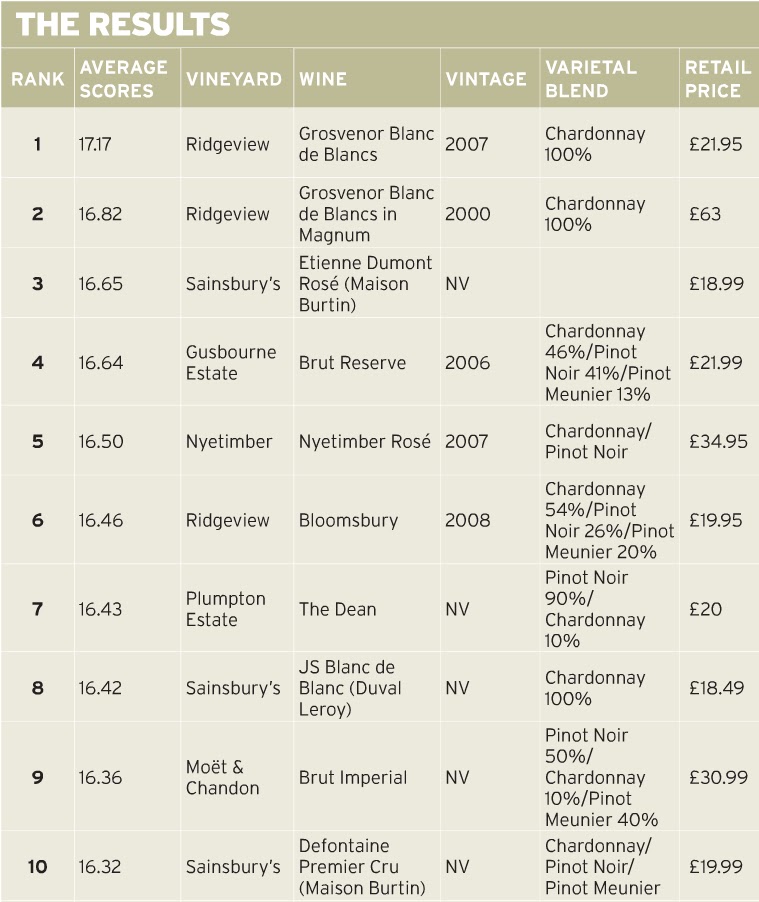
In this months Harpers, Stephen Skelton MW, who will be consulting in the new Royal vineyard in Windsor Great Park, has put together one of the most comprehensive English Wine Tastings in recent years with some interesting results. Stephen, with some of the UK's top wine journalists, blind tasted 52 English wines along with four champagnes, Pelorus NV from New Zealand and a Codorniu Cava.

Though all four champagnes made the top ten, the top two spaces were taken by the ever outstanding Ridgeview Estate with their 2007 Grosvenor Blanc de Blanc and the 2000 Grosvenor in magnum. Not bad for a wine that can often be found for less than £20. In fact, value for money was the word of the day. Four top ten wines came in at less than £20 a bottle.


The main disappointments from the tasting seemed to be the wines that were made from non-champagne varieties (Pinot Noir, Pinot Meunier and Chardonnay). Only two made the top 27, the Davenport made from 100% Reichenteiner and the Breaky Bottom made from 100% Seyval Blanc.

The conclusion was not altogether surprising. Stephen Skelton concludes "The best producers - those using the right varieties and clones - making their wines with care, ageing them for an appropriate length of time, and putting them on the market with a dosage that both respects the wine and the sector of the market they are aiming at, can produce world-class wines in line with the opposition".


If you liked this post you can get all my future posts straight to your e-mail by putting your e-mail address in the box to the right and clicking 'Submit'.